Overview
- The New Creative Partner
- Hollywood AI News: The Tension and the Contracts
- Beyond the Screen: The Business of Film
- Navigating the Future of Cinema
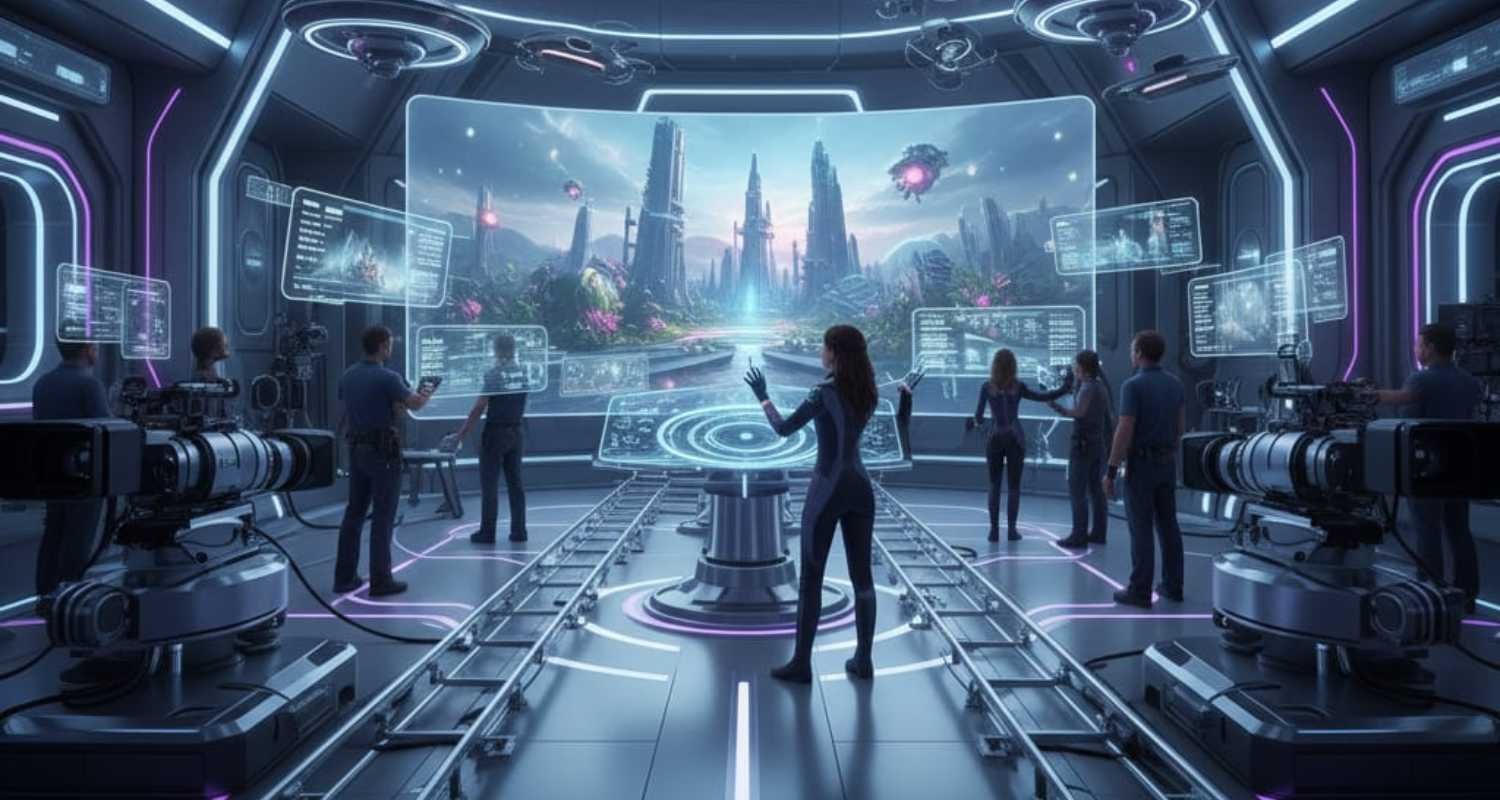
where visual effects that used to take months materialize in seconds. No longer are we watching science fiction; we’re living it. The movie business is in the midst of its biggest transformation since the shift from silent films to talkies. That means we are at the beginning of a new creative chapter in which human computer co-creation is pushing the boundaries of artistic expression to new levels.
But this isn’t all about robots usurping the director’s chair. It is about a complex, sometimes messy but unbelievably thrilling evolution of art.
The New Creative Partner
For decades, we have been watching movies about artificial intelligence: 2001: A Space Odyssey, Her. Now, the script has flipped. The tools that create the movies are becoming smart themselves.
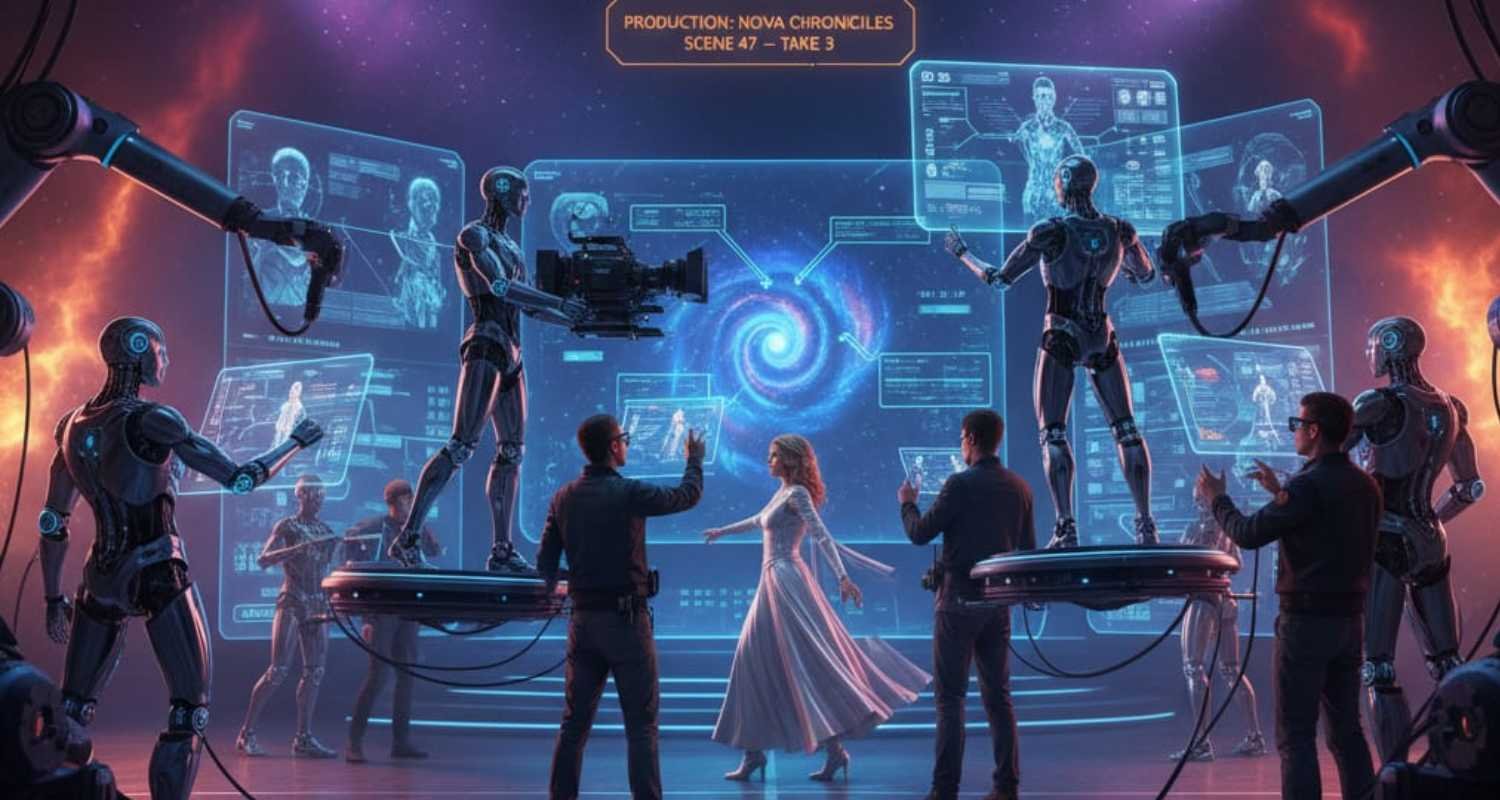
Generative AI can enhance human creativity, not replace it. Concept artists are churning out alien worlds in minutes with these tools. Screenwriters are employing A.I. to see if they’ve written themselves into a plot hole or to suggest different dialogue options when they reach a dead end. It’s emerging as a crackling assistant that does the heavy work while living human creators can focus on the emotion at the heart of their narratives.
Consider the scale of future movies. We are looking at individualized viewing experiences and special effects that can’t be distinguished from real life, possible for a fraction of what they cost today. This democratized high-end production value indicates that an indie filmmaker with a great idea might soon be able to visually compete with one of these monster-studio blockbusters.

Hollywood AI News: The Tension and the Contracts
Naturally, you cannot discuss this revolution without talking about the elephant in the room. In recent Hollywood AI news, strikes, negotiations and palpitations about job security have taken center stage.
A major sticking point when the writers and actors headed to the picket lines was AI usage. Actors concerned that studios would exploit their digital likenesses without consent or compensation. Writers worried that studios would use AI to create scripts and then only hire humans to “polish” them at a reduced rate.
These concerns are valid. The industry is struggling over how to regulate this new titan. We are witnessing the birth of new frameworks think of them as the legal equivalent of AI builder power automate flows that seek to ensure that human authors continue to be the primary benefactors from their work. These new contracts begin to draw a line in the sand: as we approach human AI collaborations, AI is seen as a tool and “human touch” describes the intellectual property that matters most.
Beyond the Screen: The Business of Film
The changes are not limited to sets they are happening in back offices too. Studios are giant businesses and use data to determine what gets greenlit. And this is where AI in Power BI comes in handy!
Though it may lack the impressive hook of CGI explosions, this power to comb through terabytes of data allows studios to pinpoint audience preferences with more precision than ever. By using data analytics, executives can forecast coming trends, tweak marketing budgets and mitigate the financial risks of huge productions. It ensures that the movie we’re actually making is one future audiences want to see.
Navigating the Future of Cinema
So, where do we go from here? The fear of AI purging the soul from filmmaking is understandable, but history points to a different outcome. And when CGI came, people declared practical effects dead and acting doomed. What we got was Gollum in Lord of the Rings and the Na’vi in Avatar human, through-and-through performances made possible by technology.
The future isn’t a zero-sum choice between human art and AI generation. It is a synthesis of the two. We are heading toward a world in which future films will be hybrid acts of creation.” They will have the efficiency and spectacle powered by A.I., but they’re still going to need the human heart that made us weep, laugh and dream.”
As we see a familiar account of how things are done scroll across the screen and fade away, we shouldn’t be afraid. The means may change, but the essence of storytelling does not. Hollywood is adjusting, like it always does.

Add comment