
We all know how it started. When tools powered by A.I. first started entering the mainstream, all sorts of people wanted in. People were joining in droves just to see how A.I. could revolutionize their workflow. But lately, a new hashtag has been cropping up on social media: #QuitGPT.
This post explores why people are re-evaluating their monthly commitments and what the “QuitGPT” movement says about the state of the subscription economy today.
The Honeymoon Phase is Over
For a while, paying a monthly fee for premium AI access felt like a no-brainer. Tools like ChatGPT offered capabilities that seemed almost magical. Whether you were drafting emails, coding, or just brainstorming ideas, the value proposition was clear.
However, as the novelty wears off, reality is setting in. Users are starting to look at their bank statements with a more critical eye. The recurring cost of $20 a month might not seem like much in isolation, but when stacked against streaming services, software licenses, and other digital subscriptions, it adds up.
This is where the “QuitGPT” trend gains momentum. People are asking a simple question: “Do I really use this enough to justify the cost?”
Why Are Users Canceling?
But as the luster fades, that reality is starting to sink in, and users are beginning to squint a bit harder at their bank statements. The monthly recurring $20 might feel like chump-change when you’re looking at it on its own, but stack it against your streaming services, software licenses, and other digital subscriptions that add up.
Are Software Engineers’ Jobs at Risk?
The motivations behind hitting that “ChatGPT subscription cancel” button are different for everyone, but a general consensus seems to be forming across social platforms.
The Ascent of Worthy Free Competitors
At first, the distance between paid and free AI models was huge. Now, that gap is closing. Free versions of certain AI chatbots or similar solutions are “ok” for day-to-day use according to many reviewers. Why pay for premium features when the basic functionality serves you just fine 90% of the time?
Subscription Fatigue
We now inhabit a world that runs on the subscription model. There is no end to the tithe from entertainment to software productivity. Consumers are becoming more selective. If a tool isn’t vital to their everyday earnings or key workflow, it’s usually the first gets rid of.
Changing User Needs
Users on such lists registered because they were curious. They tinkered with the tool, made a few fun images or some text and then … stopped. For occasional users, the continual cost outweighs the periodic use. Social media is rife with lists of people who had no idea they were subscribed until the renewal notification finally caught up to them.
The Role of Social Media
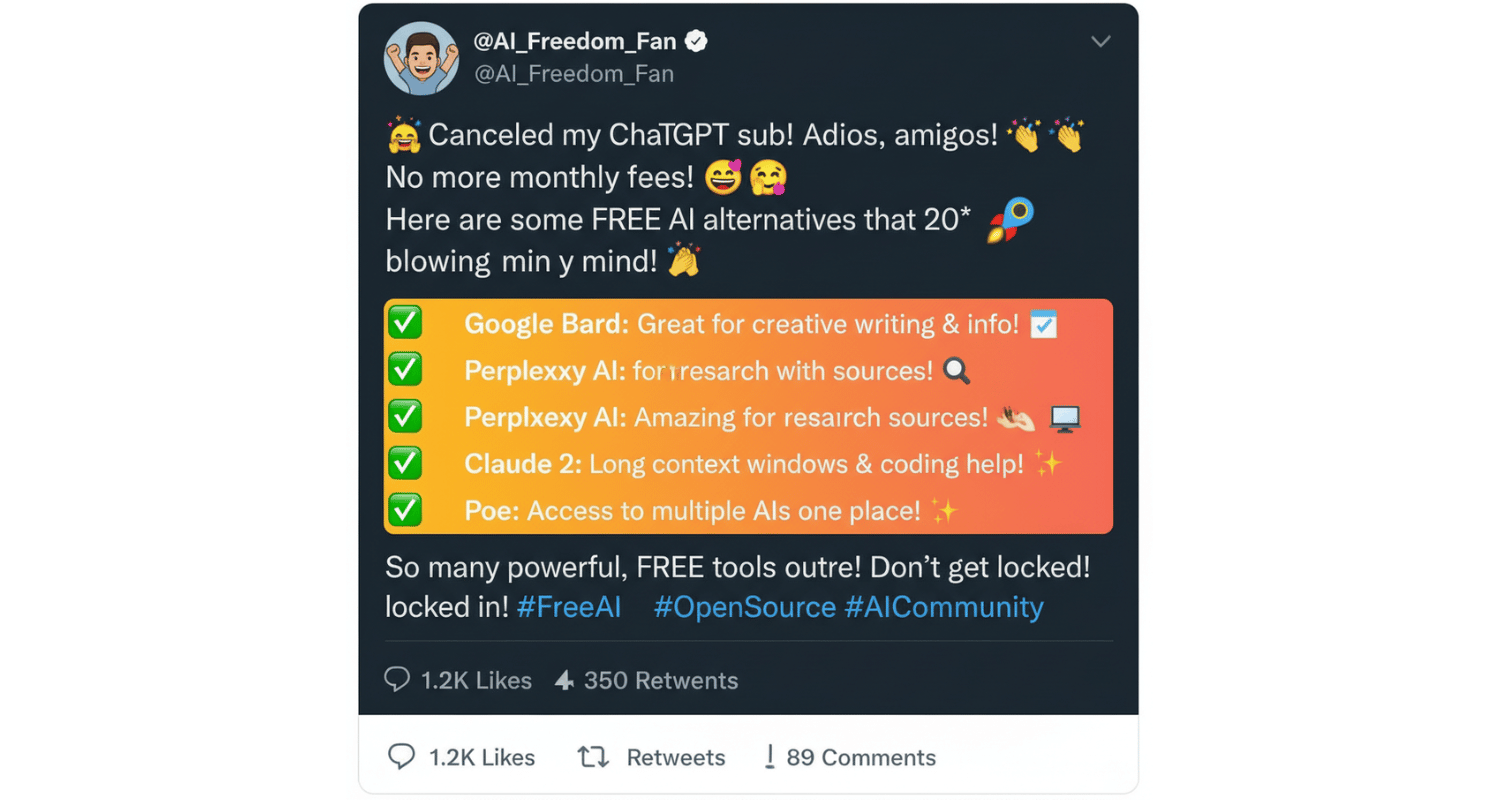
Social networking sites are big culprits in this trend. It’s not just people quietly canceling; they are talking about it.
An influencer, or an ordinary user will say on Twitter they are saving money by moving to that free social media management tool, or AI alternative; it’s like setting off a chain reaction. For anyone out there who might be on the fence, it also legitimates the decision. Viral threads and features that break down exactly how to mimic paid offerings with free resources, in essence showing others how to offboard.
This collective behavior has transformed an individual financial decision into a group effort. This isn’t so much about hating on the tech as it is smart consumerism in a crowded market.
Impact on the AI Industry
This is a strong signal to tech companies. We are moving away from the “set it and forget it” era of subscriptions. To keep subscribers paying, companies have to prove themselves worth the price month after month.
It also drives the industry to innovate. For the paid service, something truly unique must be offered if users are to start shifting over from a free product that is clearly nipping at its heels; better integration, faster speeds or features that no free tier could hope to touch.
Is This the End of AI Subscriptions?
Hardly. The “QuitGPT” trend is not a terminator, it’s a market correction. Power users, developers and anyone else who depends on advanced capabilities will most probably hold off. They know what the R.O.I. is.”
But for the average consumer, expectations have risen. Flexibility will define the future of subscription AI services. One day, we might start to see tiered models that are more affordable, pay-as-you-go features or added bonuses on top of the norm that allow companies to keep broader user segments around.
And in the end, canceling a subscription is a vote with your wallet. It compels companies to listen, evolve and provide superior value. And for the consumer, that’s a good thing.







Add comment